Introduction
A perimeter security barrier is the first and most critical line of defense for any facility requiring protection against unauthorized access, theft, vandalism, or targeted attacks. From industrial plants and data centers to government buildings and commercial properties, the right perimeter security barrier system deters intruders, delays breaches, and provides security teams with the critical time needed to respond effectively.
This comprehensive guide explores everything you need to know about perimeter security barriers — what they are, how they differ from standard fencing, the various types available, installation procedures, cost considerations, common challenges, and how to select the ideal system for your facility. Whether you are upgrading an existing perimeter or designing security for a new site, this guide provides the information you need to make informed decisions.
At contact/">Security Barrier Team, we manufacture high-quality steel perimeter security barriers designed to meet the most demanding security requirements. Request a Quote for your project today.
What Is a Perimeter Security Barrier?
Definition and Purpose
A perimeter security barrier is a physical structure or system installed around the boundary of a protected area to prevent, deter, detect, and delay unauthorized access. Unlike ornamental fencing that primarily marks property lines, a perimeter security barrier is designed to withstand deliberate breach attempts, including vehicle ramming, cutting, climbing, and forced entry.
Layered Security Concept
In modern security architecture, the perimeter security barrier forms the outermost layer of a multi-layered defense-in-depth strategy. The typical layers include:
- Outer Perimeter Barrier: The first physical obstacle — walls, fences, vehicle barriers, anti-ram systems
- Detection Layer: Sensors, CCTV, motion detectors, fiber-optic fence sensors
- Access Control Layer: Gates, turnstiles, biometric entry, vehicle inspection points
- Interior Security: Internal barriers, safe rooms, asset protection systems
- Response Layer: Security personnel, alarm systems, incident response protocols
The perimeter security barrier is the foundation upon which all other security layers depend. Without a robust barrier, other security measures cannot operate effectively.
Types of Perimeter Security Barriers
Perimeter security barriers come in many configurations, each suited to different threat levels and operational requirements.
Steel Barrier Systems
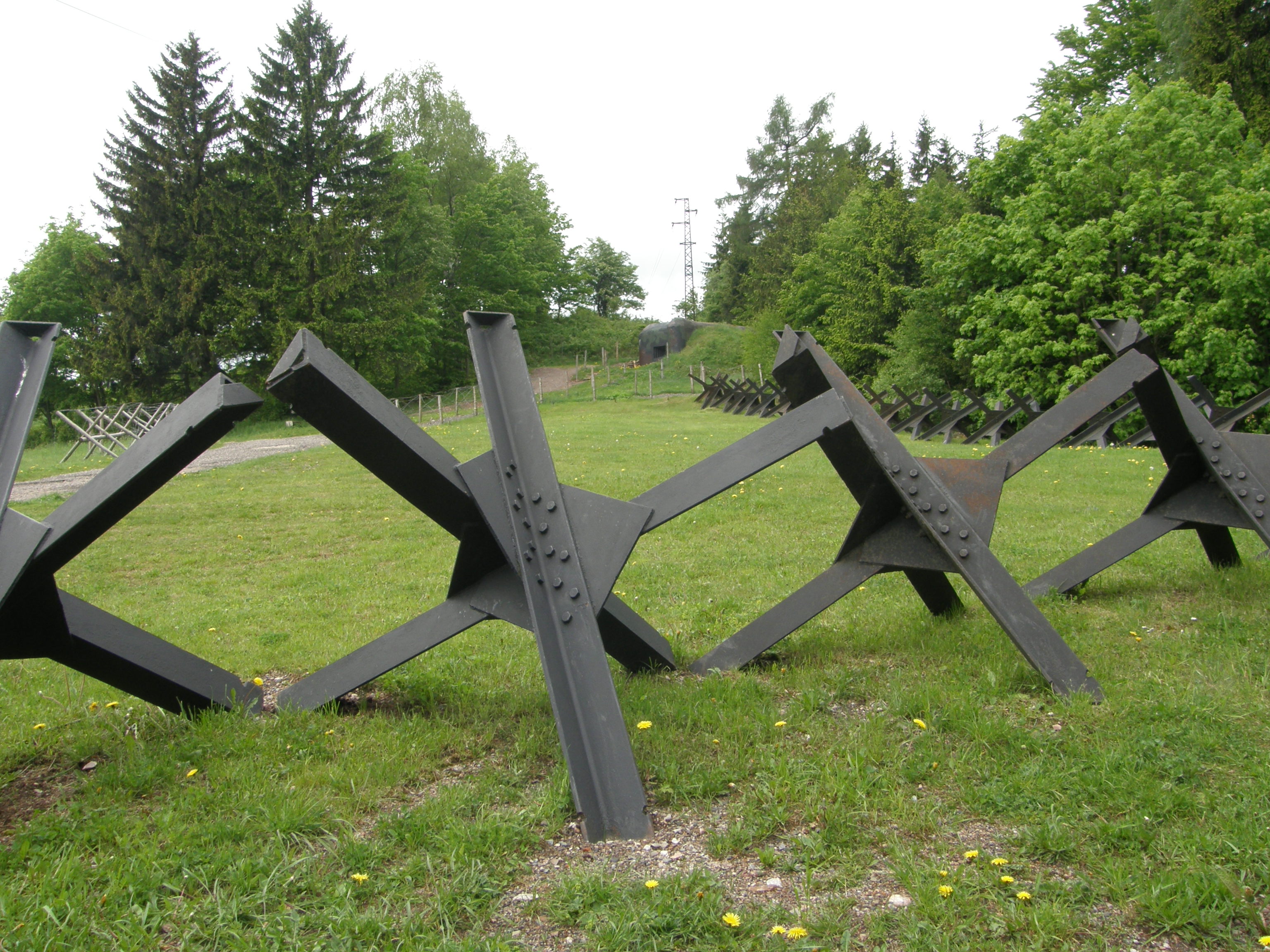
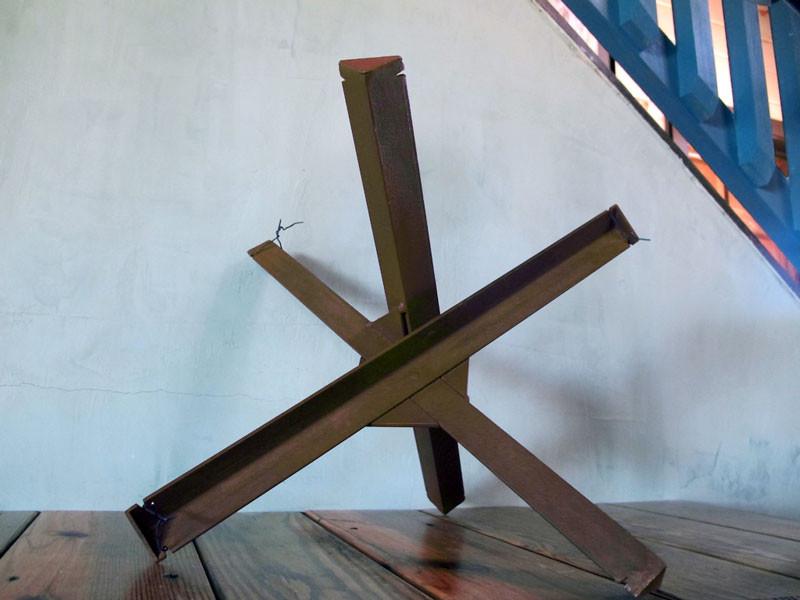
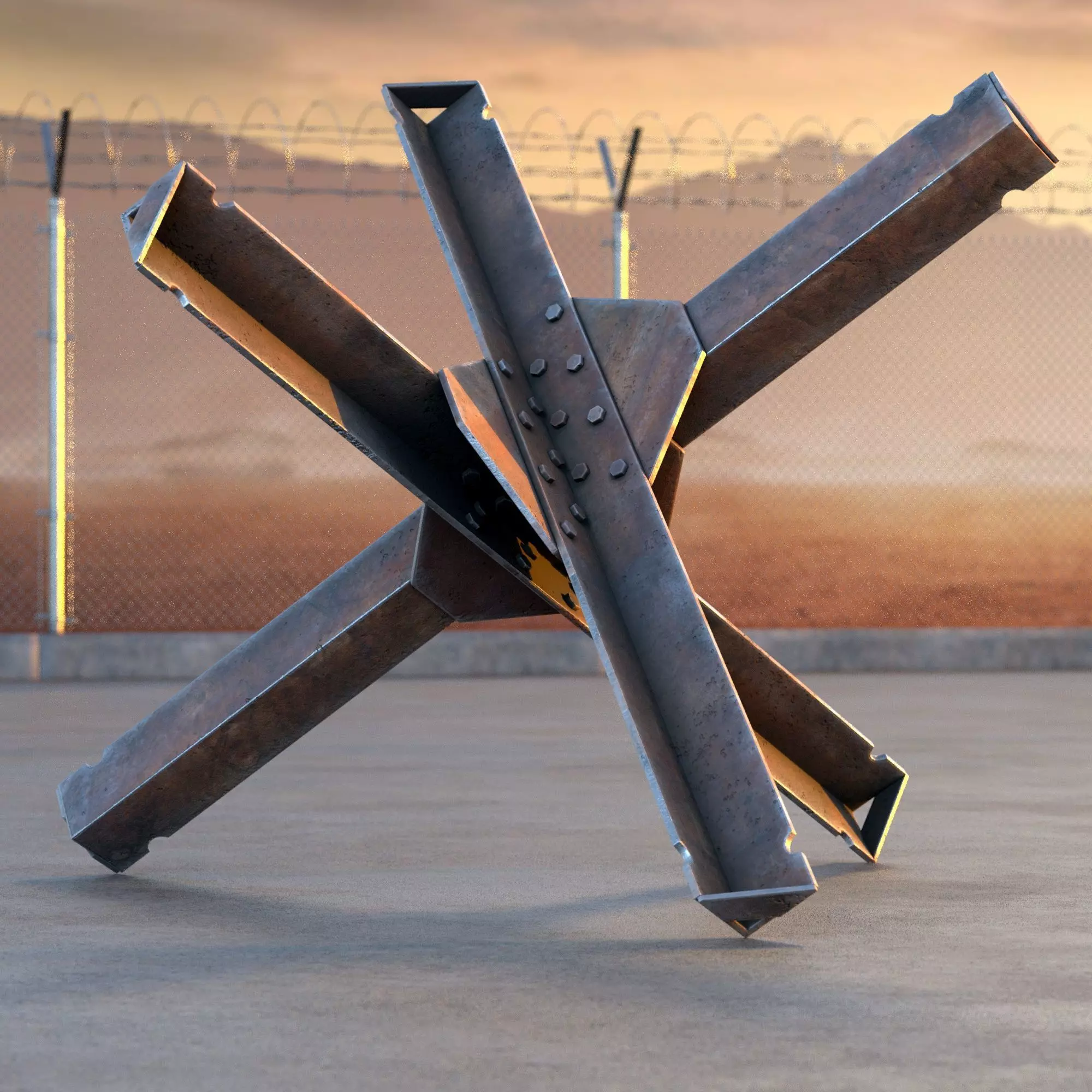
Fabricated from high-strength structural steel, these barriers provide maximum resistance to vehicle impact and forced entry. Steel I-beam and H-beam barriers (such as the Czech Hedgehog design) offer proven performance in military and high-security applications. They are available in fixed, removable, and modular configurations.
Concrete Barriers
Precast concrete Jersey barriers and concrete walls provide massive weight and impact resistance. While less easily relocated than steel, concrete barriers are ideal for permanent perimeter installations at government facilities, border crossings, and critical infrastructure sites.
Anti-Ram Bollards
Hydraulic or fixed bollards provide targeted vehicle access control while maintaining pedestrian access. Crash-rated bollards are available in K4, K8, and K12 impact ratings, making them suitable for building entrances, pedestrian zones, and urban security perimeters.
Welded Wire Mesh Security Fencing
Heavy-gauge welded mesh panels with anti-climb and anti-cut properties. When combined with toppings (razor wire, anti-climb brackets), these systems provide effective perimeter security at a lower cost than solid barriers.
Composite and Hybrid Systems
Combining multiple materials — steel frames with mesh infill, concrete bases with steel tops — to optimize security, visibility, and aesthetics. These systems are increasingly popular for commercial and urban security applications.
Perimeter Security Barrier vs Fence: Which Is Better?
This is one of the most common questions in security planning. The answer depends on your specific threat profile, security requirements, and budget.
| Aspect | Perimeter Security Barrier | Standard Security Fence |
|---|---|---|
| Primary Purpose | Stop or delay determined attacks | Deter opportunistic intrusion, mark boundary |
| Vehicle Impact Resistance | K4–K12 certified (depending on type) | None — vehicles cut through easily |
| Anti-Climb | Built-in design features, smooth surfaces | Requires razor wire or topping additions |
| Breach Time | 3–10+ minutes with power tools | 30–60 seconds with bolt cutters |
| Cost per Linear Meter | $150–$800+ | $30–$150 |
| Maintenance | Low (galvanized steel) | Moderate (rust, damage, vegetation) |
| Integration | Designed for sensor/ CCTV mounting | May require retrofitting |
Which is better? For low-security sites where the primary concern is marking boundaries and deterring casual trespassers, a security fence may be adequate. However, for facilities requiring genuine protection against motivated threats, a perimeter security barrier is the only acceptable solution. Many sites use both — a fence as a visual deterrent with a security barrier at critical points such as entry gates and vehicle approaches.
Key Features of Effective Perimeter Security Barriers
An effective perimeter security barrier must incorporate several critical features to provide meaningful protection:
- Impact Resistance: The barrier must be certified to stop vehicles at specified speeds. K4 (30 mph), K8 (40 mph), and K12 (50 mph) ratings correspond to different threat levels.
- Anti-Climb Design: Vertical surfaces should be smooth and continuous, with no handholds or footholds. Angled tops and anti-climb brackets add additional deterrence.
- Anti-Cut Construction: High-strength steel alloys, laminated construction, and hardened components resist cutting tools and torches.
- Corrosion Protection: Hot-dip galvanization or powder coating ensures the barrier maintains its integrity over decades of outdoor exposure.
- Modularity: Prefabricated sections should be replaceable individually, reducing repair time and costs if a section is damaged.
- Sensor Compatibility: The barrier design should accommodate fiber-optic sensors, vibration sensors, and CCTV mounting without requiring structural modifications.
- Access Integration: Gates, vehicle entry points, and pedestrian passages must be designed with the same security rating as the barrier line itself.
When evaluating a perimeter security barrier, verify that all components — including gates, hinges, locks, and mounting hardware — meet the same security standard as the barrier panels.
How to Install a Perimeter Security Barrier
Proper installation is critical to the effectiveness of any perimeter security barrier. Even the highest-rated barrier will fail if improperly installed.
Pre-Installation Planning
Begin with a comprehensive site survey that identifies soil conditions, underground utilities, drainage patterns, and existing infrastructure. Obtain necessary permits and verify setback requirements from property lines. Engage a structural engineer to verify foundation designs for your specific soil conditions.
Installation Steps
- Excavation: Dig foundation trenches to the depth specified in the engineering design, typically 600–1500 mm for vehicle-rated barriers.
- Foundation Preparation: Install rebar reinforcement, formwork, and anchor bolt templates. Pour concrete to specified strength (minimum 28 MPa for most installations).
- Curing: Allow concrete to cure for 7–14 days before loading, depending on ambient temperature and concrete mix design.
- Barrier Positioning: Use a crane or boom truck to set barrier sections onto the cured foundation. Align sections precisely according to the layout plan.
- Connection: Weld or bolt sections together according to manufacturer specifications. All connections must match or exceed the barrier rating.
- Finish Work: Apply corrosion-resistant coating to all weld areas and connection points. Install any sensor, CCTV, or lighting integration components.
- Testing and Certification: Conduct pull tests and impact verification on sample sections. Document all installation parameters for compliance records.

Common Perimeter Security Barrier Challenges
Even well-designed perimeter security barriers face challenges that security managers must anticipate and address.
Terrain and Environmental Factors
Uneven terrain, dense vegetation, waterways, and steep slopes all complicate barrier installation and effectiveness. Solutions include stepped barrier sections that follow terrain contours, clearing vegetation zones (typically 6–10 meters on both sides of the barrier), and specialized foundation designs for challenging soil conditions.
Maintenance and Degradation
Over time, corrosion, ground settlement, vegetation growth, and weather damage can compromise barrier integrity. Without a rigorous maintenance program, even the best perimeter security barrier will degrade. Implement quarterly inspections and immediate repairs for any damage discovered.
Balancing Security with Accessibility
Every access point is a potential vulnerability. Gates, vehicle entrances, and pedestrian passages must maintain the same security level as the barrier line while allowing efficient authorized passage. This tension between security and operational flow is a constant challenge requiring thoughtful access control design.
False Alarm Integration
When sensors are integrated into the perimeter security barrier, environmental factors such as animals, weather, and vegetation can trigger false alarms. Proper sensor selection, placement, and signal processing are essential to maintain operator confidence in the detection system.
Regulatory and Community Constraints
Local zoning regulations, historical preservation requirements, and community aesthetics concerns may limit barrier height, materials, and appearance. Early engagement with planning authorities can identify constraints before design finalization.
How to Choose the Right Perimeter Security Barrier for Your Facility
Selecting the optimal perimeter security barrier for your facility requires a systematic evaluation of security requirements, site conditions, and operational constraints.
Step 1: Threat Assessment
Identify the specific threats your facility faces: vehicle ramming, climbing intrusion, cutting/breach, mass demonstrations, or covert entry. The threat profile determines the required barrier rating and features. A military base faces different threats than a corporate data center.
Step 2: Site Analysis
Evaluate perimeter length, terrain, soil conditions, weather exposure, existing infrastructure, and utility locations. These factors affect barrier type, foundation design, and installation complexity. A 360-degree perimeter on flat land is straightforward; a perimeter through wetlands or steep slopes requires specialized solutions.
Step 3: Regulatory Compliance
Determine applicable security standards (OSHA, ASTM F2656 for crash testing, ISO, local building codes) and verification requirements. Some facilities require third-party certification of barrier performance.
Step 4: Budget and Timeline
Define the project budget including material, installation, integration, and long-term maintenance. Balance upfront costs against lifecycle value. Permanent steel barriers have higher initial cost but lower lifetime cost than alternatives requiring frequent replacement.
Step 5: Integration Requirements
Specify how the barrier will integrate with access control, surveillance, alarm systems, and security personnel workflows. A barrier that cannot be effectively monitored and controlled is significantly less valuable.
Contact our team for assistance with your security barrier assessment and specification.
Perimeter Security Barrier Cost: Pricing Guide
The cost of a perimeter security barrier varies widely based on material, rating, site conditions, and integration complexity.
Cost by Barrier Type
- Steel Anti-Ram Barriers (K4–K12 rated): $250–$800+ per linear meter. Premium systems use heavier steel sections and certified crash ratings.
- Concrete Jersey Barriers: $100–$300 per linear meter for standard highway barriers, $200–$500 per meter for enhanced security profiles.
- Security Bollards (fixed): $600–$3,000 per unit depending on crash rating and finish. Hydraulic bollards range from $3,000–$12,000 per unit.
- Industrial Steel Guard Fencing (heavy mesh): $80–$200 per linear meter installed, with anti-climb toppings adding $20–$60 per meter.
Additional Cost Factors
Site-specific factors can significantly impact total project cost: soil conditions requiring deep foundations or piling add $50–$200 per meter. Integration with access control and surveillance adds $10,000–$100,000+ depending on system scale. Gates and entry control points add $5,000–$100,000 per location. Ongoing maintenance costs typically run 2–5% of initial installation cost annually.
Cost vs. Risk Trade-off
When evaluating costs, consider the potential cost of a security breach: property damage, liability, business interruption, and reputational harm often far exceed the incremental cost of a higher-rated perimeter security barrier. Investing in a robust barrier is cost-effective risk mitigation.
For a detailed quotation tailored to your specific requirements, contact our sales team with your site specifications.
Integration with Security Systems
A modern perimeter security barrier is most effective when integrated with electronic security systems that provide detection, assessment, and response capabilities.
Sensor Integration
Fiber-optic fence sensors embedded in or attached to the barrier detect vibrations from climbing, cutting, or impact. Taut-wire sensors mounted on the barrier detect movement with high sensitivity and low false-alarm rates. Microwave and infrared detectors create volumetric detection zones alongside the barrier line.
Surveillance Integration
CCTV cameras should be positioned to provide continuous coverage of the barrier line, with analytics capable of detecting intrusion attempts, loitering, and vehicle approaches. Thermal cameras extend detection capability to low-light and adverse weather conditions.
Access Control Integration
Gates and entry points must be integrated with card readers, biometric systems, intercoms, and vehicle inspection systems. The access control system should log all entries and provide remote lockdown capability in response to detected threats.
Central Monitoring and Response
All barrier sensors and access control data should feed into a central security management platform that provides real-time alerts, incident recording, and automated response protocols. Integration with law enforcement notification systems ensures rapid external response when needed.
Applications Across Industries
Perimeter security barriers protect facilities across virtually every industry sector:
- Government and Military: Bases, embassies, courthouses, border crossings, and intelligence facilities require the highest-rated perimeter security barrier systems to protect against vehicle bombs, ground assault, and espionage.
- Critical Infrastructure: Power plants, electrical substations, water treatment facilities, dams, and communications centers are protected by barriers designed to prevent sabotage and terrorism.
- Data Centers: With the value of data continuing to rise, data center operators increasingly install steel perimeter security barriers as the first layer of a comprehensive security program.
- Commercial and Industrial: Warehouses, distribution centers, manufacturing plants, and corporate campuses use barriers to protect assets, inventory, and personnel.
- Transportation: Airports, seaports, rail yards, and trucking terminals secure their perimeters against unauthorized access, theft, and terrorism threats.
- Residential and Hospitality: High-end residential communities, hotels, and resorts increasingly install perimeter security barriers to control access and enhance resident safety.
Each industry has unique requirements, but the fundamental principle remains the same: a well-designed perimeter security barrier is the foundation of effective facility protection.
Conclusion
Selecting and implementing the right perimeter security barrier is one of the most important security decisions you will make for your facility. A robust barrier system provides the essential foundation for all other security measures, from detection sensors to access control to response protocols.
Key takeaways from this guide:
- A perimeter security barrier is fundamentally different from a fence — it is engineered to stop determined attacks, not just mark boundaries.
- Available types include steel anti-ram barriers, concrete barriers, bollards, heavy-duty mesh fencing, and hybrid systems.
- For any facility facing genuine security threats, a purpose-designed perimeter security barrier is superior to standard fencing.
- Common challenges include terrain adaptation, maintenance degradation, access vs. security balance, and regulatory constraints.
- Costs range from $80–$800+ per linear meter depending on type, rating, and site conditions.
- Integration with sensors, CCTV, and access control maximizes the value of your barrier investment.
Ready to enhance your facility security? Contact the Security Barrier Team today to discuss your requirements and receive a professional recommendation. Our experienced engineers will work with you to design, fabricate, and deliver a perimeter security barrier solution that meets your specific threat profile and budget. Request a Quote to begin your project.