Introduction
Choosing the right vehicle barrier for perimeter security requires a thorough anti ram barrier comparison across multiple factors: crash ratings, cost, installation complexity, and application suitability. With numerous barrier types available — including steel anti ram barriers (Czech Hedgehog), bollards, Jersey barriers, and concrete barriers — security professionals and procurement teams need clear, data-driven comparisons to make informed decisions.
This comparison guide evaluates the most common anti ram barrier types head-to-head across the metrics that matter most: crash performance, total cost of ownership, installation requirements, and best-use scenarios. Whether you are securing a military base, government building, commercial facility, or critical infrastructure, this comprehensive anti ram barrier comparison will help you identify the optimal solution for your specific threat environment and budget.
Anti Ram Barrier vs Bollard: Which Is More Effective?
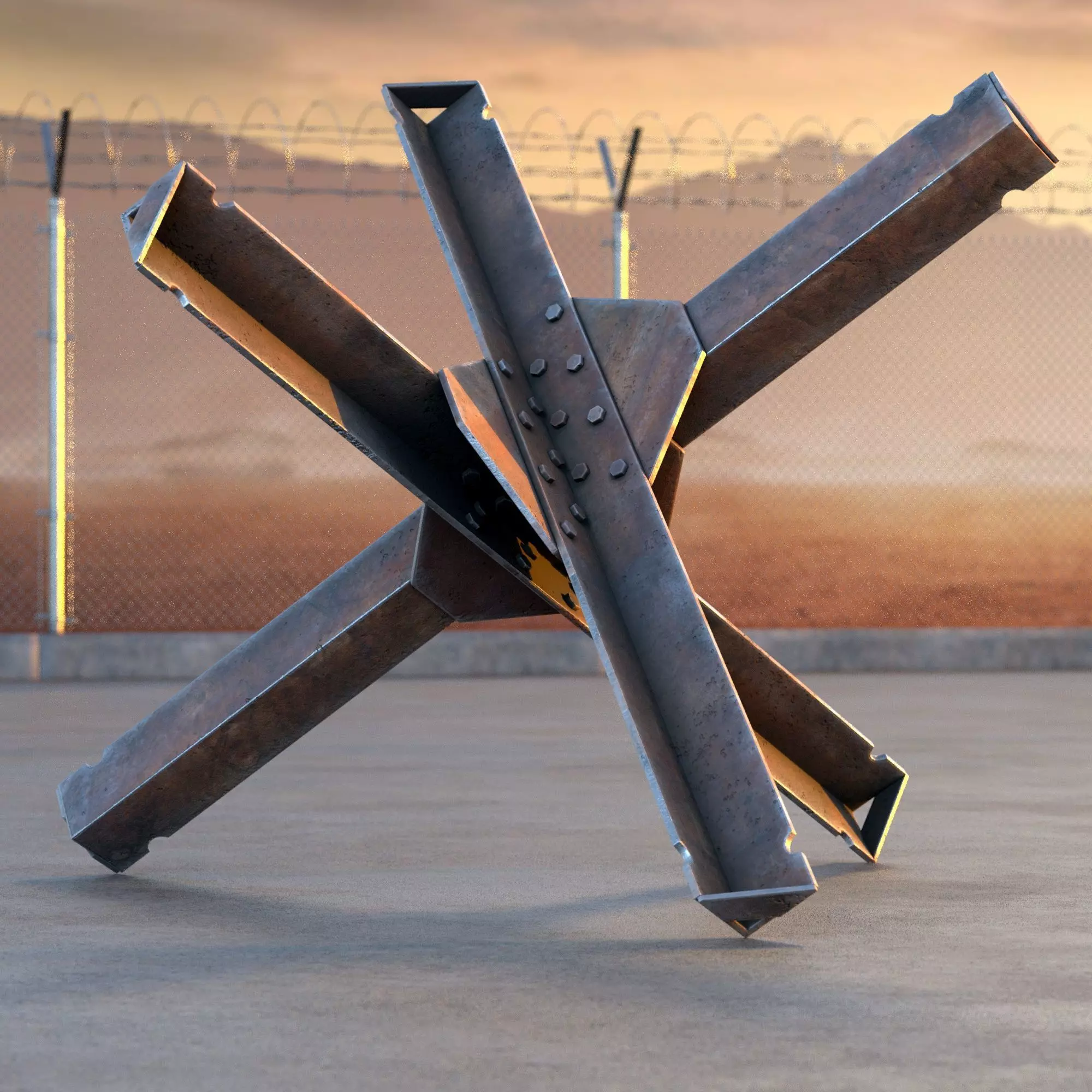
The anti ram barrier vs bollard debate is one of the most common questions in perimeter security planning. Both serve to prevent vehicle intrusion, but they differ fundamentally in design, cost, and application. Understanding these differences is essential for making the right choice.
Performance Comparison
Bollards — particularly crash-rated hydraulic bollards — offer excellent stopping power at controlled entry points. Certified to ASTM F2656 standards, they can stop a 6.8-ton vehicle traveling at 50 mph (K12 rating). However, their effectiveness depends entirely on proper foundation installation. Steel anti ram barriers like the Czech Hedgehog achieve comparable stopping capability through geometric design that lifts vehicle wheels, without requiring subsurface foundations.
Cost Comparison
The cost differential is dramatic. A single crash-rated bollard costs $3,000-10,000 plus $1,000-3,000 for foundation installation. In contrast, a steel anti ram barrier costs $150-400 with minimal installation expense. For a 100-meter perimeter requiring barriers every 2 meters, bollards would cost $200,000-650,000 versus $7,500-20,000 for steel anti ram barriers — a difference of 10-30x.
When to Choose Bollards
- Entry points requiring frequent vehicle access (with retractable bollards)
- Urban locations where aesthetics and space are constrained
- Sites requiring integration with electronic access control systems
When to Choose Anti Ram Barriers
- Large perimeter protection (military bases, border security)
- Temporary or rapidly deployable security needs
- Budget-constrained projects requiring maximum coverage
- Sites where foundation excavation is impractical
Verdict: For perimeter security where cost-effective coverage of long distances is required, steel anti ram barriers are significantly more practical. Bollards excel at controlled access points where selective vehicle entry is needed.
Anti Ram Barrier vs Jersey Barrier: Key Differences
The anti ram barrier vs jersey barrier comparison is important because Jersey barriers are widely available and commonly used for traffic separation and perimeter protection. However, they were not designed as vehicle-ramming countermeasures, which creates significant performance differences.
Design and Purpose
Jersey barriers are precast concrete shapes originally designed for highway traffic separation — their curved lower profile channels vehicle wheels to redirect impact along the barrier line rather than stopping forward motion. In contrast, anti ram barriers are specifically engineered to stop vehicle penetration by absorbing and redirecting kinetic energy through structural steel members or geometric design.
Crash Performance
Standard Jersey barriers are not crash-tested against deliberate vehicle-ramming attacks. Under high-speed impact from a heavy truck, Jersey barriers can fragment, displace, or be pushed aside. Crash-rated anti ram barriers undergo rigorous testing (ASTM F2656, IWA 14-1) to verify their stopping capability against specific vehicle weights and speeds. Additionally, concrete barriers may spall or crack under repeated impacts, requiring replacement.
Deployment Flexibility
Steel anti ram barriers offer significant advantages in deployment flexibility. They can be moved, repositioned, or stored when not needed. Jersey barriers require heavy cranes for placement and are difficult to relocate. For temporary security perimeters or rapidly changing threat environments, steel barriers are clearly superior.
Cost Analysis
| Factor | Anti Ram Barrier (Steel) | Jersey Barrier (Concrete) |
|---|---|---|
| Unit Cost | $150-400 | $100-300 |
| Installation Cost | $20-50/unit | $50-100/unit |
| Crash Tested | Yes (certified models) | No (typically untested) |
| Relocatable | Yes — forklift movable | Difficult — requires crane |
| Service Life | 20+ years (steel) | 10-15 years (concrete) |
Verdict: While Jersey barriers are cheaper per unit, anti ram barriers offer certified crash performance, reusability, and superior long-term value for security applications.
Anti Ram Barrier vs Concrete Barriers: Cost and Performance
When comparing anti ram barriers vs concrete barriers for security applications, the key differentiators are certified crash performance, installation requirements, and lifecycle value. While both are used for perimeter protection, they serve fundamentally different roles.
Crash Test Certification
The most significant difference is crash testing. Steel anti ram barriers from reputable manufacturers are independently crash-tested to ASTM F2656 or IWA 14-1 standards, with documented performance data for specific vehicle weights and impact speeds. Standard concrete barriers — whether Jersey barriers, T-walls, or precast blocks — are rarely crash-tested for vehicle-ramming scenarios. They may stop a passenger car but their performance against heavy trucks (7,000+ kg at 50 mph) is unverified.
Weight and Portability
A standard concrete Jersey barrier weighs approximately 3,000-6,000 kg per section, requiring heavy equipment for every placement or relocation. A steel anti ram barrier weighs 198-240 kg and can be moved with a standard forklift. For security perimeters that may need adjustment as threat conditions evolve, the portability advantage of steel barriers is substantial.
Lifecycle Cost Comparison
While concrete barriers have lower upfront material costs ($100-300), they incur higher lifetime costs due to: transportation (greater weight = higher freight), installation (crane required), damage susceptibility (spalling, cracking), and disposal costs at end of life. Steel barriers retain scrap value and can be repurposed indefinitely. Over a 10-year lifecycle, the total cost of ownership for steel anti ram barriers is typically 30-50% lower than concrete alternatives for security applications.
When Concrete Barriers Make Sense
Concrete barriers are appropriate for: permanent traffic separation where crash ratings are not required, areas where barrier weight provides additional stability, blast mitigation applications where mass is needed, and budget-constrained projects with very low vehicle threat levels.
Verdict: For security applications requiring verified crash performance and deployment flexibility, steel anti ram barriers outperform concrete barriers in every measure except initial unit price.
Anti Ram Barrier Crash Rating Comparison
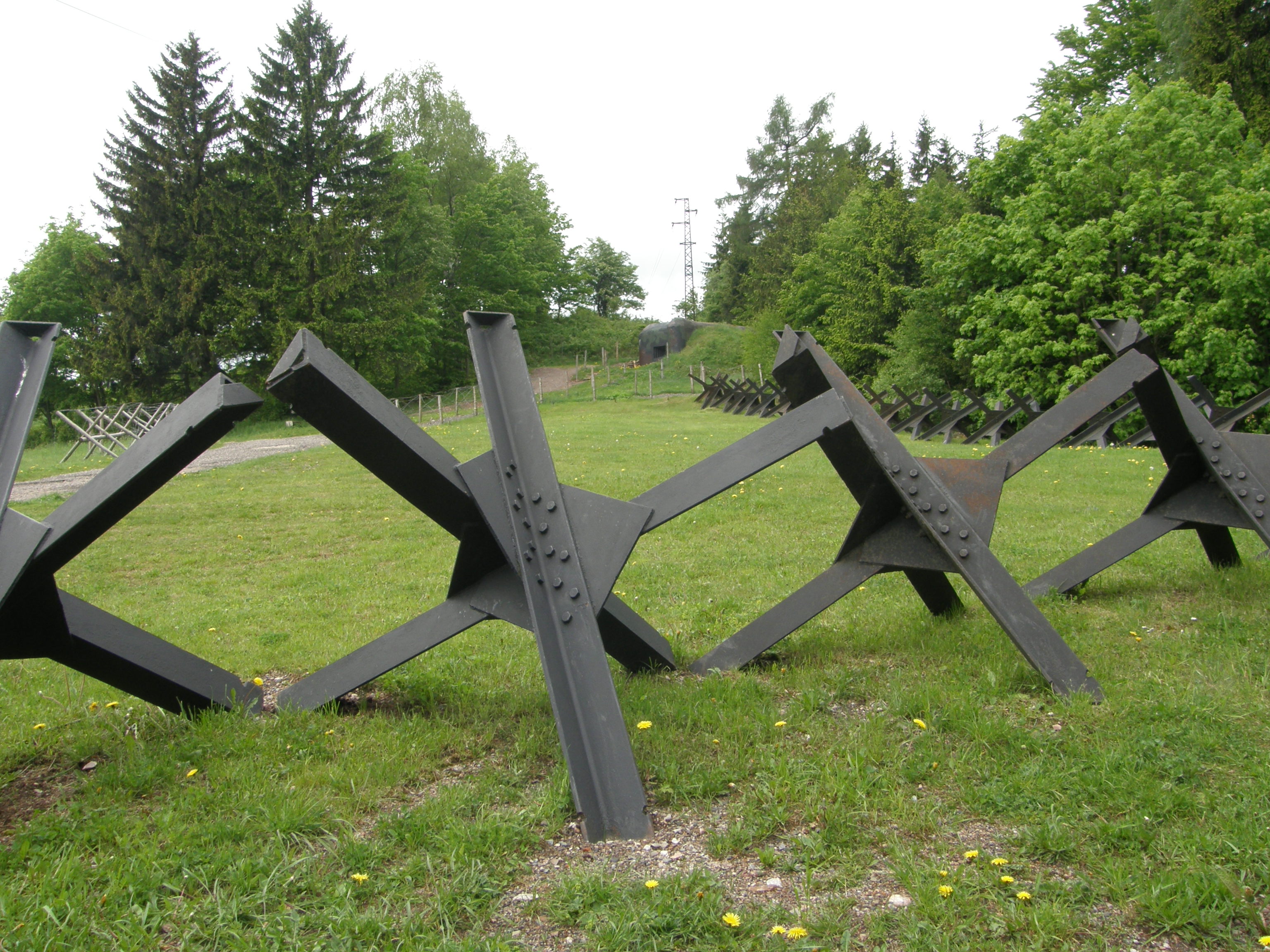
Understanding the anti ram barrier crash rating comparison is essential for selecting the right barrier for your threat level. Crash ratings are standardized metrics that define what vehicle weight and impact speed a barrier can stop. The most widely used standards are ASTM F2656 (North America) and IWA 14-1 (international).
ASTM F2656 Crash Ratings
| Rating | Vehicle Weight | Impact Speed | Typical Application |
|---|---|---|---|
| K4 | 4,500 lb (2,040 kg) | 30 mph (48 km/h) | Commercial buildings, parking areas |
| K8 | 15,000 lb (6,800 kg) | 40 mph (64 km/h) | Government buildings, military checkpoints |
| K12 | 15,000 lb (6,800 kg) | 50 mph (80 km/h) | Embassies, high-security military installations |
How Different Barrier Types Compare by Crash Rating
- Steel Czech Hedgehog Barriers: K4-K12 depending on configuration, arm length, and foundation anchoring. Without anchoring, steel barriers achieve K4-K8 ratings by lifting vehicle wheels. When bolted to concrete footings, they can achieve K12.
- Hydraulic Bollards: K4-K12 with properly designed foundation systems. Performance depends heavily on subsurface soil conditions and concrete footing design.
- Concrete Jersey Barriers: Not certified under ASTM F2656. Performance is unpredictable against heavy vehicles at high speeds. Some manufacturers offer crash-tested concrete barriers, but these require engineered reinforcement.
- Sliding Gates: K4-K12 available but with significantly higher cost ($20,000-100,000+ per gate).
Penetration Ratings (M-rating)
Beyond the K-rating (stopping capability), ASTM F2656 also defines penetration ratings (M30 through M50) that measure how far the vehicle penetrates past the barrier line. M50 allows up to 50 feet of penetration, M30 up to 30 feet, and M10 up to 10 feet. For most security applications, M30 or better is recommended.
Anti Ram Barrier Cost Comparison
A detailed anti ram barrier cost comparison reveals substantial differences between barrier types that go far beyond unit price. Total cost of ownership — including installation, maintenance, relocation, and lifecycle — tells a more complete story.
Total Cost Comparison Table
| Cost Factor | Steel Anti Ram Barrier | Crash-rated Bollard | Jersey/Concrete Barrier |
|---|---|---|---|
| Unit Price (100+ qty) | $150-400 | $3,000-10,000 | $100-300 |
| Foundation Work | $0-50/unit | $1,000-3,000/unit | $0-100/unit |
| Installation Labor | $20-50/unit | $500-1,500/unit | $50-100/unit |
| Shipping (per unit) | $10-30 | $50-200 | $30-100 |
| Total per Unit (Landed) | $180-530 | $4,550-14,700 | $180-600 |
| Total for 500m Perimeter | $45,000-132,500 | $1,137,500-3,675,000 | $45,000-150,000 |
Hidden Costs to Consider
- Certification Documentation: Barriers with certified crash test reports may cost 20-50% more, but the documentation is essential for government and insurance compliance.
- Maintenance: Steel barriers require occasional rust treatment (every 3-5 years). Bollards require hydraulic system maintenance annually. Concrete barriers may need spall repair.
- Relocation: Steel barriers can be moved at any time with a forklift. Bollard relocation requires excavating concrete footings. Concrete barriers require crane mobilization ($500-2,000 per move).
Cost Verdict: Steel anti ram barriers offer the lowest total cost of ownership among crash-rated solutions. While concrete barriers appear similar in upfront cost, they lack certified crash performance, making steel barriers the better value for security applications requiring verified protection.
Best Anti Ram Barrier for Military Bases
Determining the best anti ram barrier for military bases requires evaluating specific operational requirements that differ from commercial or government building applications. Military bases face unique threats including deliberate vehicle-borne attacks, rapid threat escalation, and the need for scalable perimeter defenses.
Key Requirements for Military Base Barriers
- High Crash Rating (K12): Military bases must stop heavy vehicles at high speeds. K12-rated barriers are the minimum standard for main perimeter defenses.
- Rapid Deployment: Military operations may require establishing or adjusting perimeter defenses quickly. Steel anti ram barriers can be deployed at 20-30 units per hour.
- Scalability: Barrier systems must scale from small forward operating bases to large permanent installations.
- Low Maintenance: Barriers in remote or austere environments require minimal upkeep. Steel barriers with rust patina require no ongoing maintenance.
- Stackable Storage: When not in use, steel barriers can be stacked for compact storage (30-40 units per 20ft container).
Recommended Configuration for Military Bases
For permanent military base perimeters, a layered defense combining steel anti ram barriers and reinforced entry control points is recommended:
- Primary Perimeter: Staggered double row of K12-rated steel anti ram barriers with 1-2 meter spacing between units.
- Vehicle Entry Points: K12-rated sliding gates or hydraulic bollards with inspection bays and vehicle arrest systems.
- Anti-circumvention: Barriers extended into adjacent terrain features to prevent vehicle bypass.
- Rapid Deployment Zones: Pre-positioned steel barrier stocks for emergency perimeter expansion.
Top Recommendation: For military base perimeter security, steel Czech Hedgehog barriers offer the best balance of crash performance, deployment speed, and cost-effectiveness. Their proven battlefield record, K12 capability when properly anchored, and ability to be deployed without heavy equipment make them the optimal choice for military applications.
Best Anti Ram Barrier for Perimeter Security
For general perimeter security applications, the best anti ram barrier depends on site-specific factors including threat level, budget, installation timeline, and whether the protection is temporary or permanent. This section provides a decision framework for selecting the optimal barrier type.
Decision Matrix: Best Barrier by Scenario
| Application Scenario | Recommended Barrier | Rationale |
|---|---|---|
| Large permanent perimeter | Steel anti ram barrier (K8-K12) | Best cost per meter, certified performance, long service life |
| Temporary security event | Steel anti ram barrier (K4-K8) | Rapid deployment and removal, no foundation damage |
| Urban entry control point | Retractable bollard (K4-K12) | Selective access, aesthetic integration |
| Remote / austere location | Steel anti ram barrier | No power or hydraulic infrastructure required |
| High-traffic commercial area | Concrete barrier + steel hybrid | Combined mass and certified performance |
| Border security (long distance) | Steel anti ram barrier (staggered rows) | Lowest cost per kilometer, fast deployment |
Perimeter Security Best Practices
Regardless of barrier type chosen, effective perimeter security follows these principles: maintain clear standoff distance between barrier line and protected assets, integrate barriers with surveillance and detection systems, establish vehicle inspection protocols for all entry points, plan for barrier maintenance and periodic testing, and document all barrier specifications and certifications for compliance purposes.
Installation Process Comparison
The installation process varies significantly across barrier types and is a critical factor in the anti ram barrier comparison. Installation complexity affects both upfront cost and the ability to adjust perimeters as threats evolve.
Steel Anti Ram Barrier Installation
Time: 3-5 minutes per unit with a forklift and 2 workers. Equipment: Forklift or boom truck. Foundation: None required for surface deployment. Optional concrete footing for K12 anchoring. Process: Position, align, and (optionally) bolt to concrete pad. Relocation: Simple forklift pickup and reposition.
Hydraulic Bollard Installation
Time: 2-5 days per installation. Equipment: Excavator, concrete pump, hydraulic tools. Foundation: Reinforced concrete footing, 1-2 meters deep. Process: Excavate, form concrete, install hydraulic lines, set bollard, backfill, connect power. Relocation: Requires demolition and re-excavation.
Concrete Jersey Barrier Installation
Time: 5-10 minutes per section. Equipment: Crane or large forklift. Foundation: None for surface placement. Process: Lift, position, connect interlocking pins. Relocation: Requires crane each time.
Installation Timeline Comparison for 500m Perimeter
- Steel Anti Ram Barriers: 1-2 days (250 barriers at 3-5 min each)
- Concrete Barriers: 2-3 days (100 sections at 5-10 min each plus mobilization)
- Crash-rated Bollards: 2-4 weeks (125 bollards at 2-5 days each including foundation curing)
Key Takeaway: Steel anti ram barriers offer the fastest deployment timeline, making them ideal for urgent security requirements, temporary events, or phased perimeter development where immediate protection is needed while permanent systems are being installed.
Conclusion and Selection Guide
This comprehensive anti ram barrier comparison demonstrates that no single barrier type is optimal for every application. The right choice depends on your specific threat assessment, site conditions, budget constraints, and operational requirements.
Quick Selection Guide
- For maximum coverage at lowest cost: Steel anti ram barriers (Czech Hedgehog) — ideal for large perimeters, military bases, and border security. Offers K4-K12 crash ratings at $180-530 per unit with rapid deployment.
- For controlled entry points requiring vehicle access: Crash-rated hydraulic bollards — higher cost ($4,550-14,700 per unit) but enables selective access control.
- For temporary or rapidly changing security needs: Steel anti ram barriers — unmatched flexibility and redeployability with no foundation requirements.
- For budget-constrained projects with low threat levels: Concrete barriers — lowest upfront cost but limited crash performance and difficult relocation.
Next Steps
To select the right anti ram barrier for your project: conduct a threat assessment to determine required crash rating and standoff distance, survey your site for ground conditions, access points, and existing infrastructure, establish your budget including installation and lifecycle costs, request technical proposals from multiple manufacturers with documented crash test certification, and consider a phased deployment starting with the most critical perimeter segments.
For detailed pricing, technical specifications, and manufacturer recommendations tailored to your specific project requirements, contact our team for a personalized anti ram barrier comparison and procurement consultation.