Introduction
A perimeter defense barrier is a critical component of any comprehensive security infrastructure, designed to protect military installations, government facilities, critical infrastructure, and high-value assets from unauthorized access and hostile threats. Unlike standard fencing, a perimeter defense barrier is engineered to withstand deliberate breach attempts, vehicle impacts, and sustained assault. These robust barriers form the outermost layer of a layered defense strategy, providing the first line of deterrence and physical protection.
Whether you are securing a military base, a border checkpoint, or a sensitive industrial facility, understanding the capabilities and limitations of different perimeter defense barrier systems is essential for making informed procurement decisions. This guide explores the types, features, deployment strategies, and costs associated with modern perimeter defense barriers, helping you select the right solution for your operational requirements.
At contact/">Security Barrier Team, we manufacture high-quality steel perimeter defense barriers that meet rigorous military and industrial standards. Request a Quote for your project today.
What Is a Perimeter Defense Barrier?
Definition and Core Purpose
A perimeter defense barrier is a physical obstacle system placed along the outer boundary of a protected area to prevent, delay, or deter intrusion by personnel or vehicles. Unlike conventional fences that primarily mark boundaries, a perimeter defense barrier is designed for active denial — it must stop a determined adversary. These barriers are typically constructed from high-strength steel, reinforced concrete, or a combination of materials engineered to absorb impact and resist cutting or demolition.
How It Differs from Standard Barriers
The fundamental distinction between a perimeter defense barrier and a standard security fence lies in intent and engineering. A fence keeps honest people honest; a defense barrier stops determined threats. Military-grade barriers are rated for vehicle impact resistance (K4 through K12 ratings), blast resistance, and anti-climb characteristics. They are often integrated with surveillance systems, sensors, and access control points to create a complete security envelope. The primary keyword perimeter defense barrier specifically refers to these hardened obstacle systems rather than lightweight boundary markers.
Key Features of Perimeter Defense Barriers
Modern perimeter defense barrier systems incorporate several critical features that distinguish them from standard fencing solutions:
- Vehicle Impact Resistance: Crash-rated barriers capable of stopping vehicles at speeds up to 80 km/h (K12 rating), preventing ramming attacks.
- Anti-Climb Design: Smooth surfaces, angled tops, and anti-grip profiles that prevent scaling without specialized equipment.
- Anti-Cut and Anti-Torch Protection: Hardened steel alloys and specialized coatings that resist cutting torches, saws, and grinders.
- Modular Construction: Prefabricated sections that can be rapidly deployed and configured to match terrain requirements.
- Corrosion Resistance: Hot-dip galvanized or powder-coated finishes that ensure long service life in harsh environments.
- Integration Compatibility: Designed to accommodate CCTV cameras, motion sensors, lighting, and access control systems.
These features make a perimeter defense barrier a comprehensive security solution rather than a simple obstacle. When evaluating options, consider the specific threat profile of your installation to select appropriate resistance ratings.
Types of Perimeter Defense Barriers Available
Different operational requirements demand different types of perimeter defense barriers. Understanding the available options helps you match the barrier to the specific threat environment.
Steel Anti-Tank Barriers (Czech Hedgehog)
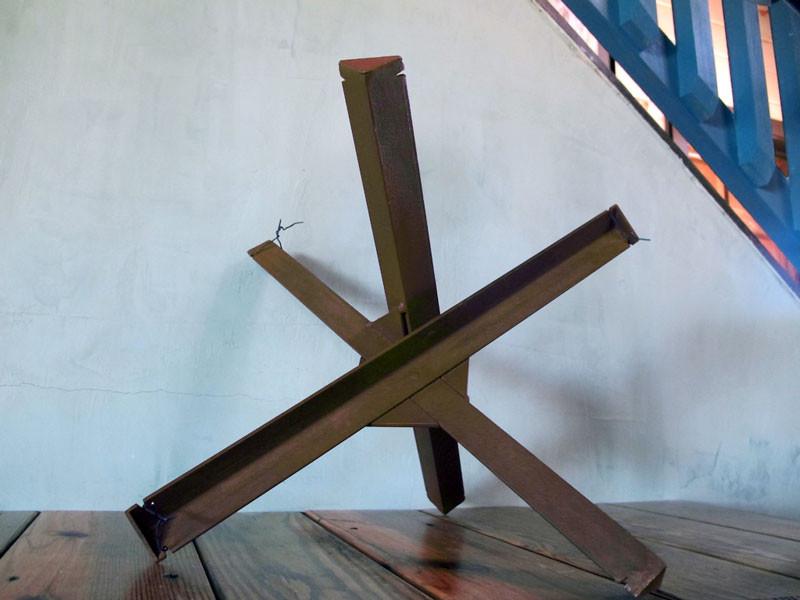
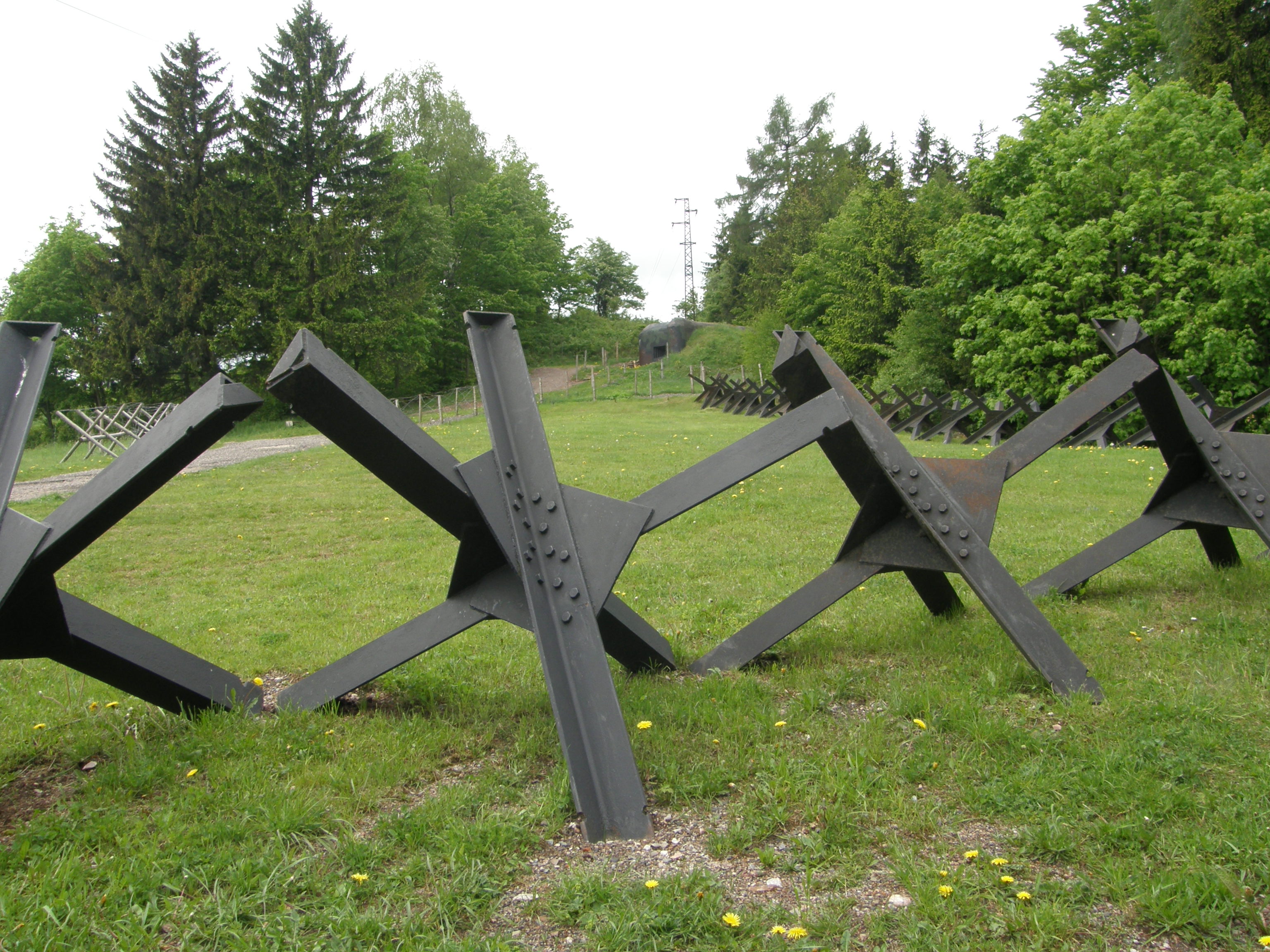
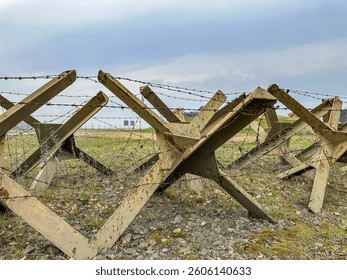
The iconic steel anti-tank barrier, commonly known as the Czech Hedgehog, is one of the most proven perimeter defense barrier designs in history. Made from three intersecting steel rails or I-beams, these barriers are extremely effective against vehicle attacks and are nearly impossible to remove without heavy equipment. They remain widely used for military perimeter protection.
Concrete Jersey Barriers
Precast concrete barriers provide massive weight and impact resistance. Common in urban security and border control applications, concrete Jersey barriers offer excellent vehicle stopping power but are less easily relocated than steel alternatives.
Steel Plate Barriers
Fabricated from thick steel plate with reinforced structural supports, these barriers deliver high strength-to-weight ratios and can be configured for specific site requirements. They are ideal for permanent installations requiring maximum security.
Anti-Ram Bollards
Hydraulic or fixed bollard systems provide targeted vehicle access control while maintaining pedestrian flow. Often used at building entrances and checkpoints, they complement the perimeter defense barrier line.
Portable Perimeter Defense Barrier Options
Yes, portable perimeter defense barrier options are widely available and increasingly popular for temporary or rapidly changing security requirements. These mobile systems offer the same protective capabilities as permanent installations with the added benefit of relocation flexibility.
Modular Steel Barrier Systems
Prefabricated steel modules that connect with interlocking pins or brackets can be assembled and disassembled quickly without special tools. A single truck can transport enough modules to secure several hundred meters of perimeter. These systems are ideal for forward operating bases, event security, and temporary military positions.
Hesco-Type Concertainer Barriers
Collapsible wire mesh and fabric containers that are filled on-site with sand, gravel, or soil. When filled, they provide substantial ballistic and blast protection. These barriers are highly portable in their collapsed state and can be deployed rapidly using local fill materials.
Mobile Anti-Ram Barriers
Wheeled or skid-mounted barrier systems designed for checkpoint and access point security. These portable perimeter defense barrier units can be towed into position and anchored within minutes, providing immediate vehicle stopping capability.
Rapid Deployment Systems
Specialized military-grade barriers featuring quick-release mechanisms and lightweight high-strength materials that enable a small team to establish a defensive perimeter in under 30 minutes. These systems often incorporate integrated sensor mounts and firing ports.
Perimeter Defense Barrier vs Security Fence: Key Differences
Understanding the distinction between a perimeter defense barrier and a standard security fence is crucial for proper security planning. While both serve perimeter protection functions, they differ significantly in design, capability, and cost.
| Aspect | Perimeter Defense Barrier | Security Fence |
|---|---|---|
| Primary Function | Stop/delay determined attacks | Mark boundary, deter casual intrusion |
| Vehicle Impact Rating | K4–K12 certified | None or minimal |
| Material | Steel I-beam, reinforced concrete | Chain link, welded wire mesh |
| Anti-Climb | Integrated design features | Requires add-on razor wire |
| Installation | Heavy foundation required | Post-and-rail mounting |
| Cost per Meter | $200–$800+ | $30–$150 |
| Lifespan | 20–50 years with maintenance | 10–20 years |
The choice between a defense barrier and a fence depends on your threat assessment. For military bases, embassies, power plants, and border control points, a perimeter defense barrier is the minimum standard. For lower-security commercial properties, a reinforced security fence with surveillance may suffice. Many installations use both — a fence as an outer layer with defense barriers at critical points.
How to Deploy a Perimeter Defense Barrier for Military Use
Military deployment of a perimeter defense barrier requires careful planning and execution. The effectiveness of the barrier depends as much on proper deployment as on the barrier itself.
Site Assessment and Threat Analysis
Begin with a thorough assessment of the terrain, potential approach routes, and identified threat vectors. Factors such as vehicle approach speed, available concealment, and standoff distance all influence barrier placement and specifications.
Barrier Configuration and Layout
A typical military perimeter defense barrier deployment uses multiple lines: the outer barrier absorbs initial impact, the inner barrier provides depth, and intermediate zones are covered by observation and fire. Staggered barrier placement prevents straight-line vehicle approaches and creates engagement corridors.
Integration with Surveillance and Response
Barriers must be integrated with observation posts, CCTV coverage, and quick-reaction forces. Gaps for authorized entry require controlled access points with additional hardening. The deployment plan should include:
- Primary barrier line with vehicle-rated stops at all entry points
- Secondary barrier line 10–20 meters behind the primary line
- Clear fields of fire and observation between barrier lines
- Reinforced entry control points with sliding or retractable barrier sections
- Emergency vehicle access routes with rapid-deploy barrier options
Perimeter Defense Barrier Cost: What to Expect
The cost of a perimeter defense barrier varies significantly based on materials, specifications, site conditions, and deployment complexity. Understanding the cost factors helps with budget planning and procurement decisions.
Cost Breakdown by Component
- Material Costs: Steel barriers typically range from $150–$400 per linear meter depending on steel grade, thickness, and surface treatment. Higher K-rating barriers cost more due to heavier steel sections and more complex fabrication.
- Foundation and Installation: Ground preparation, concrete foundations, and installation labor add $100–$300 per meter. Rocky or uneven terrain increases foundation costs.
- Access Control Integration: Gates, sliding sections, and vehicle inspection points add $5,000–$50,000 per entry point depending on automation level.
- Transport and Logistics: Heavy steel barriers require specialized transport. A typical 40-foot container ships approximately 50–80 linear meters of barrier sections.
Total Cost Estimates
For a complete perimeter defense barrier system including delivery and installation, budget $300–$800 per linear meter for permanent steel systems. Portable systems cost less per unit but may have higher per-use deployment costs. Concrete barriers typically fall in the $200–$500 per meter range.
For a precise quotation tailored to your specific requirements, contact our team with your site dimensions and security classification.
Material Specifications and Durability
Steel Grades and Standards
Premium perimeter defense barriers are manufactured from structural steel grades meeting international standards such as ASTM A36, EN 10025 S355, or equivalent. The steel composition directly impacts impact resistance and longevity. Key specifications to evaluate include:
- Yield Strength: Minimum 250 MPa for standard barriers, 350 MPa+ for high-security applications
- Section Dimensions: I-beam or H-beam profiles with flange widths of 150–300 mm depending on height and rating
- Wall Thickness: Typically 8–20 mm for primary structural members
- Galvanization: Hot-dip galvanized to ASTM A123 or ISO 1461 standards, minimum 85 microns coating thickness
Environmental Durability
A properly manufactured perimeter defense barrier should provide 20–30 years of service life in most environments. In coastal or corrosive environments, specify stainless steel components or enhanced coating systems. Regular inspection schedules should check for corrosion at weld points, ground contact areas, and mechanical joints.
Installation and Maintenance Requirements
Site Preparation
Proper installation of a perimeter defense barrier begins with site preparation. The barrier footprint must be cleared, leveled, and compacted. For permanent installations, concrete footings are poured to anchor the barrier sections. The footing depth depends on the barrier height and soil conditions — typically 600–1200 mm deep for vehicle-rated barriers.
Installation Process
- Survey and Layout: Mark the barrier line according to engineering drawings
- Excavation: Dig footing trenches to specified depth and width
- Reinforcement: Install rebar cages and anchor bolt templates
- Concrete Pour: Pour and cure foundation concrete (minimum 28 MPa strength)
- Barrier Placement: Set steel sections using crane or boom truck
- Connection: Weld or bolt sections together according to specifications
- Finishing: Apply touch-up coating to weld areas and connection points
Maintenance Schedule
Implement a quarterly inspection program for all perimeter defense barrier systems. Check for corrosion, loose connections, ground settlement, and impact damage. Annual maintenance should include tightening all bolted connections, repairing coating damage, and verifying gate and access control functionality.
Applications of Perimeter Defense Barriers
Perimeter defense barriers serve diverse applications across military, government, and commercial sectors:
- Military Bases and Installations: Protection of personnel, equipment, and sensitive areas from vehicle-borne threats and ground assault. Barriers are configured to support defensive positions and controlled access.
- Border Security: National border control points and high-traffic crossing areas where vehicle barriers prevent forced entry while allowing authorized passage.
- Critical Infrastructure: Power plants, water treatment facilities, communication centers, and data centers require hardened perimeter protection against sabotage and terrorism.
- Government Buildings: Embassies, courthouses, and administrative centers where vehicle standoff distance must be maintained to prevent attacks.
- Ports and Airports: Securing cargo handling areas, fuel storage, and passenger terminals against unauthorized vehicle access.
- Commercial High-Security Sites: Research facilities, precious metal storage, and corporate headquarters requiring elevated security postures.
Each application demands specific barrier configurations, and our team can help match the ideal perimeter defense barrier system to your operational requirements.
Conclusion
Selecting the right perimeter defense barrier requires a thorough understanding of your specific threat environment, site conditions, and operational requirements. From portable rapid-deployment systems for tactical military positions to permanent steel barriers for critical infrastructure protection, the right solution depends on matching barrier capabilities to identified risks.
Key takeaways from this guide:
- Perimeter defense barriers are fundamentally different from security fences — they are engineered to stop determined attacks, not just mark boundaries.
- Available types include steel anti-tank barriers, concrete Jersey barriers, steel plate systems, and portable modular solutions.
- Costs typically range from $300–$800 per linear meter installed, with significant variation based on specifications and site conditions.
- Proper deployment integrates the barrier with surveillance, access control, and response forces for maximum effectiveness.
- Material specifications, installation quality, and ongoing maintenance directly impact long-term performance.
For expert guidance on selecting and procuring the ideal barrier system for your facility, contact the Security Barrier Team today. Our engineers will work with you to specify, fabricate, and deliver a perimeter defense barrier solution that meets your exact requirements. Request a Quote to begin your project.